TIRE TECH
All Weather Tires Vs. All Season Tires

When shopping for new tires, it's easy to assume that all-weather and all-season tires are the same thing. While their names are similar, the two tire types are designed to perform differently in changing weather conditions.
Understanding the difference is especially important for Canadian drivers, where road conditions can vary dramatically throughout the year. Choosing the right tire can impact your vehicle's traction, handling, braking performance, and overall safety.
Whether you're commuting through the city, navigating mountain highways, or preparing for winter weather, knowing the strengths and limitations of each tire type can help you make the best choice for your driving needs.
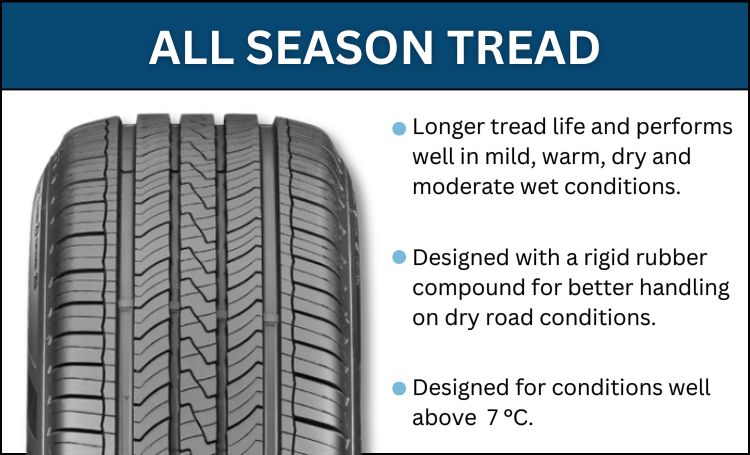
All-Season Tires
All-season tires are designed to provide reliable performance in spring, summer, and fall. They offer a comfortable ride, long tread life, and dependable handling in both dry and wet conditions.
These tires are an excellent choice for drivers who experience mostly moderate weather throughout the year. Most all-season tires feature the M+S (Mud and Snow) designation, which indicates they can handle light snow and muddy conditions.
However, all-season tires are not designed for severe Canadian winter conditions. When temperatures consistently fall below 7°C, the rubber compound begins to harden, reducing traction and braking performance on cold, snowy, and icy roads.
For drivers who regularly encounter harsh winter weather, an all-weather or dedicated winter tire may be a better option.
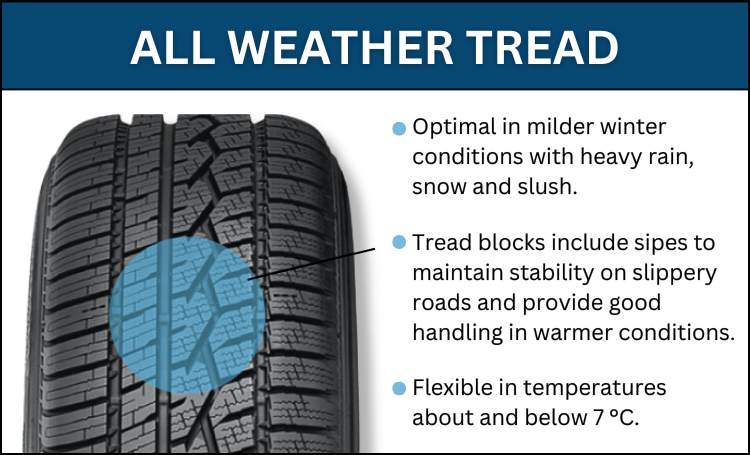
ALL-Weather Tires
All-weather tires are designed to provide year-round performance, making them a popular choice for drivers who want one set of tires for every season. They offer many of the same benefits as all-season tires while providing enhanced traction in cold weather.
Unlike all-season tires, all-weather tires carry the Three-Peak Mountain Snowflake (3PMSF) symbol, which means they have been tested and approved for use in severe snow conditions. Their specialized rubber compounds remain more flexible in colder temperatures, helping maintain grip when the weather changes.
All-weather tires are well-suited for drivers in Alberta and British Columbia who experience a mix of rain, snow, slush, and dry roads throughout the year. They provide better winter performance than all-season tires while eliminating the need for seasonal tire changes.
While all-weather tires perform well in winter conditions, they may not match the snow and ice traction of a dedicated winter tire in extreme winter weather. For drivers who frequently encounter deep snow, icy roads, or mountain travel, a winter tire remains the best option for maximum cold-weather performance.
Which Tire Should You Choose?
If most of your driving is in mild weather and urban environments, all-season tires may be the right fit.
If you regularly encounter snow, freezing temperatures, or changing weather conditions, all-weather tires can provide added confidence throughout the year.
What About Winter Tires?
Dedicated winter tires remain the best option for drivers who face severe winter conditions, mountain travel, or frequent icy roads. Their specialized rubber compounds and tread patterns are designed to maximize grip when temperatures drop.
Need Help Deciding?
Our team at North Country Tire can help you compare your options and find the right tire for every season.
Contact your local North Country Tire location today for expert advice.